
IS "FREE" TV REALLY FREE?
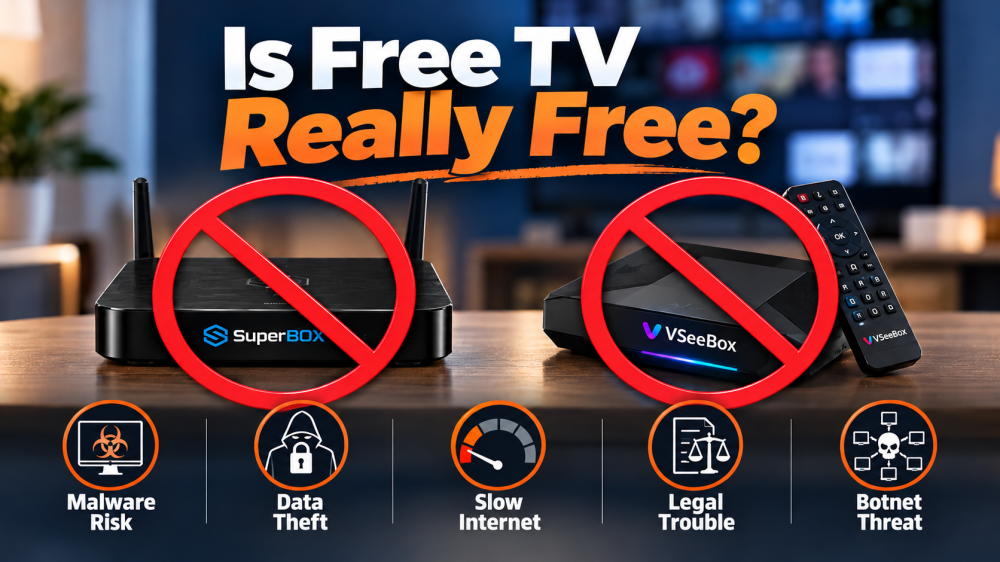
Streaming devices are more popular than ever, but consumers should be extremely cautious of so-called “free TV” or “super box” devices that promise unlimited access to live sports, movies, and premium channels at no monthly cost.
These devices are often marketed as “fully loaded,” “plug-and-play,” or “user friendly,” with access to services like Netflix, HBO, Hulu, Prime Video, and live television, all supposedly included for free. Many are Android-based devices sold under unfamiliar brand names such as X96, MX10, VSeeBox, SuperBox, and countless others.
If that sounds too good to be true, it usually is.
Behind the convenience and low upfront cost can be serious cybersecurity, privacy, and legal risks that most users never realize.
Why These Devices Appeal to Consumers
The appeal is easy to understand:
- A one-time purchase instead of paying monthly streaming subscriptions
- Access to movies, sports, and TV without recurring costs
- Simple setup marketed as “plug-and-play”
- Sold openly through online marketplaces, social media, and even local sellers
- Widespread normalization, “everyone has one”
With the average American household now spending significant money each month on streaming subscriptions, many consumers see these devices as an easy way to save money.
Unfortunately, the hidden cost can be far greater than a monthly subscription bill.
What We’re Seeing Happen to Real Customers
This is not just a theoretical risk.
We are actively seeing and hearing about real problems caused by unauthorized streaming devices in homes and businesses right here in our communities.
These are our neighbors.
Severely Slowed Internet Networks
Customers have contacted us complaining that their internet suddenly became slow, unstable, or unreliable.
After investigating, we discovered that certain free streaming devices were continuously transmitting massive amounts of data in the background, even when the television was turned off.
In several cases, once the device was unplugged, the network problems immediately improved.
Some of these devices were uploading an average of 1 terabyte (TB) of data every week.
To put that into perspective, that is roughly equivalent to:
- Uploading 250 high-definition movies every week
- Uploading approximately 250,000 photos every week
That level of unexplained outbound traffic is highly abnormal for a legitimate streaming device.
Why Constant Uploading Is a Major Red Flag
Legitimate streaming devices primarily download content while you are actively watching something.
Many of the unauthorized devices we have encountered do the opposite, they constantly upload data from inside the customer’s network.
That behavior strongly suggests the device may be:
- Collecting personal or network information
- Communicating with unknown third-party servers
- Acting as part of a larger botnet or malicious network
- Being remotely controlled without the owner’s knowledge
Once connected, the device sits inside the home network, the same network used for:
- Online banking
- Work-from-home systems
- Smartphones and laptops
- Security cameras
- Smart home devices
- Personal communications
In other words, the device is already behind your firewall and inside your private network.
Many of These Devices Lack Basic Security Standards
A major concern is that many of these products are not certified Android TV devices.
Instead, they often run modified versions of the Android Open Source Project (AOSP) without the security protections and safeguards found on legitimate certified devices.
Security researchers and law enforcement agencies have warned that some low-cost Android streaming boxes may already contain malware before they are even sold.
This is sometimes referred to as a “supply chain infection.”
Users typically never see any warning signs.
Malicious software on these devices can disguise itself as legitimate applications or even impersonate other trusted devices on the network.
The FBI Has Issued Warnings
The FBI has publicly warned consumers about low-cost Android TV streaming devices sold under unfamiliar brand names.
According to recent public warnings, malware campaigns have infected millions of internet-connected devices, including TV streaming boxes. Some devices may already contain hidden malware when purchased, while others become infected during setup or software installation.
Once connected to a home network, infected devices can quietly become part of a botnet, allowing criminals to:
- Use the customer’s internet connection for illegal activity
- Launch cyberattacks
- Conduct scams or fraud
- Steal data
- Hide malicious traffic behind residential internet connections
Most users never realize it is happening.
What Is a Botnet?
A botnet is a collection of internet-connected devices infected with malware and remotely controlled by cybercriminals.
Hackers commonly target weaker Internet of Things (IoT) devices such as:
- Streaming boxes
- Cameras
- Smart TVs
- Thermostats
- Routers
- Other connected home devices
Once one device inside a network becomes compromised, malware can potentially spread or interact with other systems on the same network.
That means a seemingly harmless TV box could expose far more than just your television.
Legal Concerns Consumers Should Understand
There is also a significant legal issue that many consumers overlook.
These devices are often marketed around unauthorized access to copyrighted content. While the hardware itself may not be illegal, using applications or services that distribute stolen copyrighted material absolutely can be.
Consumers sometimes assume:
- “Everybody uses them”
- “They sell them openly online”
- “If it were illegal, they wouldn’t be allowed to sell them”
Unfortunately, that is not how copyright law works.
Not understanding the law does not protect users from legal consequences.
Risk of Personal Data Theft
Because these devices often operate outside normal security standards, they can create a direct path for attackers to:
- Intercept passwords and login credentials
- Monitor browsing activity
- Access connected computers and phones
- Interact with smart home devices
- Collect personal or financial information
What appears to be a cheap entertainment device can quietly become a back door into a customer’s digital life.
Protect Yourself and Your Home Network
To reduce your risk:
- Avoid devices promising “free” or “unlimited” access to paid content
- Purchase streaming products only from reputable manufacturers
- Be cautious of social media and marketplace deals
- Monitor your network for unusual activity or unexplained data usage
- Disconnect devices that behave suspiciously
- Keep all legitimate devices updated with security patches
Trusted streaming devices from major manufacturers are designed with significantly stronger security protections and regular software updates.
There is no such thing as truly free premium television.
Many of these devices are designed to appeal to consumers frustrated by rising streaming costs, but the hidden risks can include malware, privacy violations, stolen data, degraded internet performance, legal exposure, and compromised home networks.
What looks like a bargain can quickly become a serious cybersecurity problem.
Disclaimer:
While not every low-cost streaming device is malicious or compromised, consumers should understand that unauthorized streaming platforms often lack the security oversight, software validation, and support provided by established manufacturers.
Sources:
GET IN TOUCH
TOLL FREE: 888-508-2946 | 24/7 SUPPORT: 888-508-2946
 Carroll: 712-775-2946 | Breda: 712-673-2311
 Contact Us
 Our Locations
© Copyright 2026 | Western Iowa Networks
CONNECT WITH US
Follow us on social media to get the latest on special offers, updates, and other Western Iowa Networks promotions.


